We're Just Starting
For weeks now, (and a monthlong break... sorry) we’ve been walking a narrow path. Tracing what it looks like to follow Jesus in an age of politics, power, and polarization. If you’ve been reading along, you know we haven’t taken the easy way. We’ve asked hard questions about allegiance, identity, and the kind of witness the Church is meant to embody in the public square.
And if you’ve felt uneasy, that’s okay.
If you’ve felt seen, or convicted, or unsure what to do with it all… same.
That tension might just be the Holy Spirit whispering:
“There’s more to see. Come further.”
Because what we’ve explored so far? It’s just the first layer.
Where We’ve Been
I never officially titled the last series. It just emerged. Six posts, each tugging a thread where faith meets culture. But looking back, the heartbeat was clear:
Deconstruct confusion. Reconstruct clarity.
We wrestled with:
- Loving the foreigner
- How power corrupts, even with good intentions
- Bearing true witness in an age of lies
- Choosing the Cross over the sword
- Calling out Christian nationalism for what it is
If there’s one thread running through all of it, it’s this:
The Kingdom of God is not America. And Jesus does not share His glory with the gods of nationalism, wealth, or control.
That’s not a “liberal” claim. It’s an ancient Christian one.
If You’ve Felt the Discomfort…
Let me name something plainly:
If these posts have stirred something in you, but you don’t know how to untangle it all, you’re not alone. Maybe you, like me…
- Are realizing some of what you were taught as “Christian values” was civic religion in disguise
- Are disturbed watching Christians defend what Jesus would confront
- Have always felt the flag in church was… off, but couldn’t explain why
- Feel spiritually homesick: like the faith you love has been hijacked
If so… that discomfort may be grace.
This isn’t about becoming jaded. It’s about rediscovering the ancient path.
Into Exile, With God
This week, one verse cracked me open:
“Come out of her, my people…” — Revelation 18:4
It’s not just about ancient Babylon. It’s about now. About us. About every empire that demands loyalty in exchange for safety and success.
Then I read Ezekiel 10.
God leaves the Temple. Not in rage, but in grief. His glory departs the very place that bore His name.
But where does He go? He walks the eastern road.
Into exile.
The Alpha and Omega. The Holy One. The Consuming Fire… goes into exile. With His people.
Because His love is deeper than their failure. He didn’t abandon them. He joined them in the wilderness.
That’s the path we’re on too.
Into the Borderlands
Not away from God, but with Him.
Out of the false temples. Into clarity.
Into the borderlands, where one kingdom fades into another and the lines blur with tension.
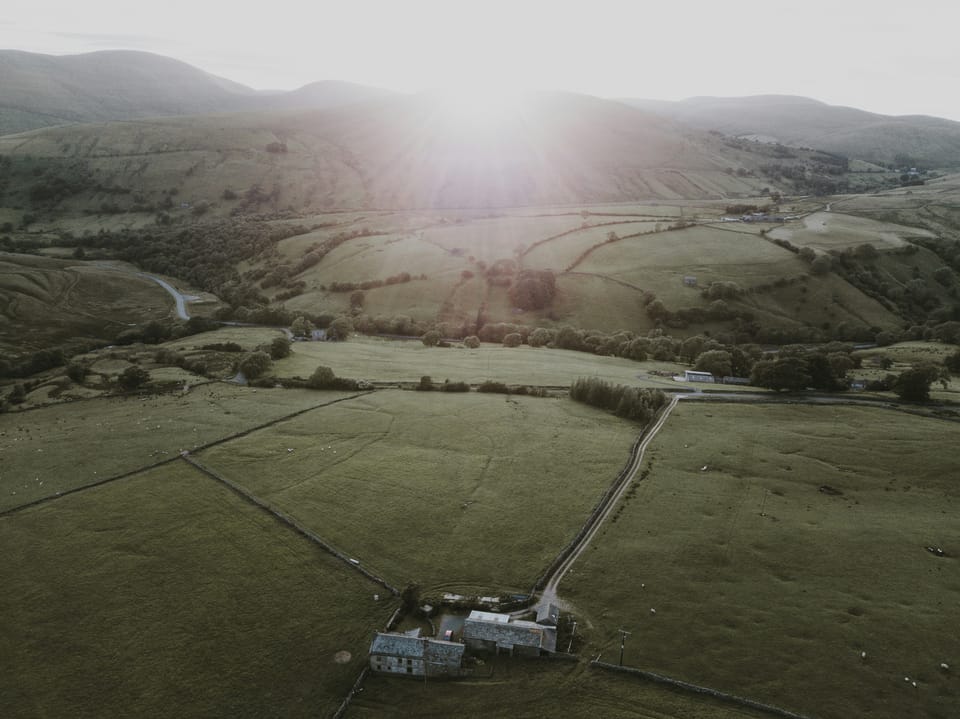
The British once had a word for this kind of place: The Marchlands.
The March was the contested zone—between Scotland and England, England and Wales—where kings drew borders, but the land itself refused to be tamed. Armies marched in. Fortresses rose and fell. But the people of the March? They belonged to no crown. They were forged in the in-between. Exiles from both sides.
A few years ago, I found out my ancestors lived in the Marchlands for centuries. Displaced. Defiant. Free.
And something about that stuck with me.
Because that’s who the Church is meant to be.
Strangers and foreigners... A Kingdom of mercy, not might... Shaping beauty in the cracks of empire.
That’s why this blog is called Letters from the Western March.
Because we aren’t in the capital. We aren’t at court. We aren’t safe behind the walls.
We are out here, on the edge of empire. Writing letters home. Building something holy in the no-man’s-land.
Introducing the Next Series: Naming Babylon
“They confessed they were strangers and exiles…” — Hebrews 11:13
“Seek the welfare of the city…” — Jeremiah 29:7
That’s the tension. We’re in Babylon. But we do not belong to it.
This next series is called Naming Babylon.
It’s not about rejecting your country. It’s about loving the Kingdom more.
It’s not political commentary. It’s spiritual clarity.
It’s not a call to disengage. It’s a call to re-align our allegiance.
A Preview of Where We’re Headed
This nine-part arc will unfold in three movements:
- Unmasking Empire – Babylon isn’t ancient history. It’s still here, dressed in new colors, running on Wi-Fi. We’ll trace its presence from Scripture to now, and learn how to recognize it when we see it.
- Deconstructing the Myths – To follow Jesus faithfully, we’ll have to unlearn the myths. About America. About our nation's patron god(s). About the Church’s role in empire. Because every empire wants a chaplain, not a prophet.
- Exilic Discipleship – We weren’t made to rule Babylon. We were made to resist it. We’ll look at how to live as holy exiles: rooted, not assimilated. Practicing sabbath, hospitality, justice, lament. This is how we endure. This is how we shine.
What I Hope You’ll See
This isn’t a culture war rant. It’s a kingdom invitation.
It’s not rage. It’s repentance.
It’s not about them. It’s about us.
To live like Jesus is Lord, not just in our worship songs, but in our politics. Not just in our private hearts, but in our public witness.
Babylon is alive and well. It wears a flag pin. It quotes Scripture. But its gods are Mammon and Mars. And our call is not to baptize it… but to live as holy exiles within it.
If You’re Still With Me…
Let’s go there.
I no longer trust the kind of power that seeks God’s blessing but refuses to submit to His ways.
And I’m trying, imperfectly and slowly, to live like someone whose King was crucified by empire.
Because Jesus is Lord. And President—I mean Caesar—is not.
From the March,
R.A. Fen