You Yourselves Were Once Foreigners: Have We Forgotten?
“Never forget where you came from.”
It’s a phrase we hear in pop culture, politics, and even award speeches, usually meant to keep someone grounded or grateful. Or, if you grew up on The Lion King like I did, you might hear Mufasa’s voice echoing: “Remember who you are.” That moment always stuck with me. Simba had forgotten who he was and, with it, the responsibilities tied to his name. But long before it was an Instagram caption or Disney movie plot, it was a command from God.
“Remember, you yourselves were once foreigners in the land of Egypt.” —Exodus 22:21b (NLT)
This wasn’t a feel-good slogan. It was a core identity marker. Israel’s national story was meant to be shaped by remembering, by empathy born of deliverance. Forgetting who they were would lead to forgetting who God is. And when they forgot, judgment followed.
Somewhere along the way, American Christians forgot, too. Hospitality became optional. Mercy became political. And now, many Christians support policies that directly harm the very people God calls us to love.
The Stranger in Our Story
The call to welcome the foreigner isn’t a biblical side note. It’s a drumbeat. By some counts, God reminds Israel at least 36 times to remember their own past as foreigners or slaves in Egypt. It’s one of the most repeated commands in the Old Testament.
“When a foreigner resides among you in your land, do not mistreat them. The foreigner residing among you must be treated as your native-born. Love them as yourself, for you were foreigners in Egypt.” —Leviticus 19:33–34 (NLT)
Did you catch that the original context of the second greatest commandment was about immigrants? Love your neighbor as yourself, even when your neighbor wasn’t born here. Actually, especially then.
And this wasn’t just a suggestion. The Law includes direct blessings for obedience and curses for disobedience.
“Cursed is anyone who denies justice to foreigners, orphans, or widows. And all the people will reply, ‘Amen.’” —Deuteronomy 27:19 (NLT)
This wasn’t just a moral principle; it was baked into Israel’s founding covenant. The treatment of the outsider was essential to their national identity. A community that turned its back on the foreigner brought judgment on itself.
Jeremiah later echoes this in his warning to Judah:
“If you do not oppress the foreigner, the fatherless or the widow… then I will let you live in this place...” —Jeremiah 7:6–7 (NIV)
Israel’s survival was tied to justice. Their future depended not on military strength but on whether they reflected God’s mercy to the marginalized.
Jesus doesn’t soften the message.
“For I was hungry, and you fed me. I was thirsty, and you gave me a drink. I was a stranger, and you invited me into your home.” —Matthew 25:35 (NLT)
This isn’t a metaphor. Jesus identifies Himself with the stranger. The command to love the outsider becomes the dividing line at the final judgment: the sheep and the goats. To ignore the foreigner is to ignore Christ.
And the stakes get even higher.
The Sin of Sodom Wasn’t What You Were Taught
Let’s be honest: for years, many American Christians have pointed to Sodom as a textbook example of God's stance on sexual immorality. But God actually gives His own explanation through the prophet Ezekiel:
“Sodom’s sins were pride, gluttony, and laziness, while the poor and needy suffered outside her door.” —Ezekiel 16:49 (NLT)
The final nail in Sodom’s coffin was their refusal to welcome strangers. When angels came to the city, they were not only rejected, but targeted with violence. And did you know it was actually the first of two instances of almost the exact same event?
Because about 700 years later, in Judges 19, it’s Sodom all over again; but this time, it’s not pagans. It’s God’s people. In fact, just one verse earlier in the Ezekiel passage, God compares Israel to Sodom, and calls them worse.
"As surely as I live, says the Sovereign Lord, Sodom and her daughters were never as wicked as you and your daughters."—Ezekiel 16:48 (NLT)
Forgetfulness leads to collapse. When God’s people forget who they were, they begin to look just like the nations He rescued them from.
What Kind of People Are We Becoming?
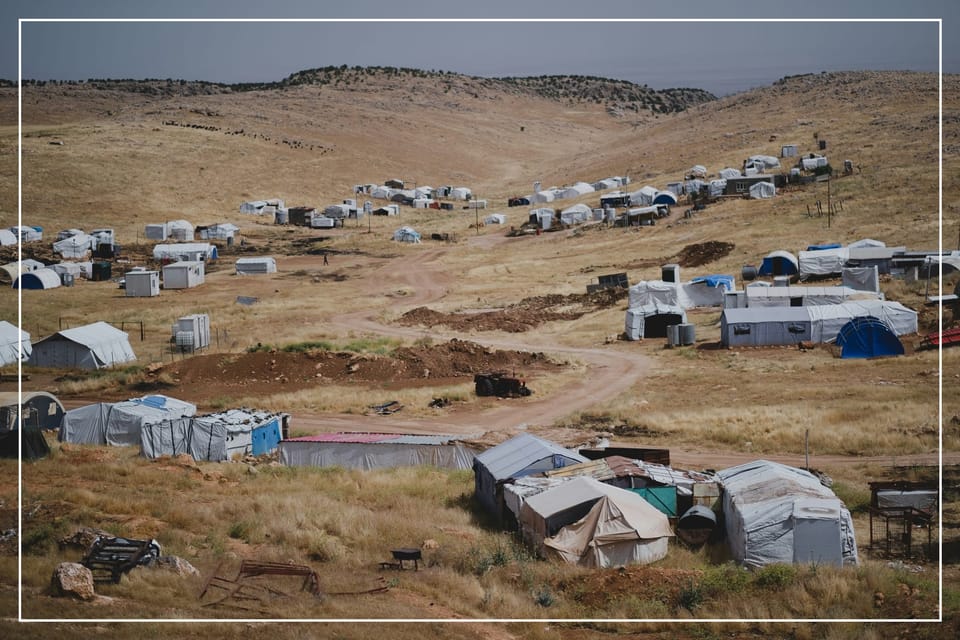
Today, millions are displaced by war, climate disaster, and poverty. And far too often, American Christians respond with suspicion, not compassion. We cheer for border walls. We scoff at asylum seekers. We repost fear-mongering headlines and categorize entire ethnic groups based on a handful of bad people.
And then we go to church and worship the refugee King.
But let’s not pretend this is new. Israel forgot. Sodom rejected. Gibeah regressed. And Jesus warned us:
“I was a stranger, and you didn’t invite me in.” —Matthew 25:43 (NLT)
When we ignore the immigrant, the refugee, the asylum-seeker, we ignore Jesus. That’s not exaggeration. That’s red letters.
The Kingdom Belongs to Foreigners
Scripture is filled with "outsiders": Ruth the Moabite. Rahab the Canaanite. The Magi from the East. And every time, God welcomes them in. Even Jesus was a refugee. He fled Herod’s violence with His family to Egypt. He became what so many Christians today fear.
To be the people of God is to remember who we were and welcome others in the same way God welcomed us.
“So now you Gentiles are no longer strangers and foreigners. You are citizens along with all of God’s holy people. You are members of God’s family.” —Ephesians 2:19 (NLT)
This isn’t progressivism or liberal politics. It's the Gospel. Earlier in that same chapter, Paul tells us:
“But God is so rich in mercy, and he loved us so much, that even though we were dead because of our sins, he gave us life when he raised Christ from the dead. (It is only by God’s grace that you have been saved!)” — Ephesians 2:4–5 (NLT)
What If We Remembered?
Imagine a Church that truly remembered, "You once were foreigners..."
What if hospitality wasn’t seen as naïve but sacred? What if our political instincts were shaped by kingdom memory, not fear? What if the loudest Christian voices were crying out for mercy instead of deportation?
Jesus said, “You will know them by their fruit.” Let’s make sure the fruit we bear reflects the welcome we’ve received. Because we ourselves were once strangers. And by grace, we were brought in.
I no longer trust the kind of power that builds walls and calls it righteousness. I trust the One who said, “I was a stranger, and you welcomed me.”
And I’m trying, imperfectly and slowly, to live like someone who remembers. Because:
Jesus is Lord. And President—I mean, Caesar—is not.
From the March,
R.A. Fen